This mental model for how envision (and I could be wrong) the phases that majority of kayakers will go through (or at least have available to them). And even if this isn’t a universal truth, this is how I see differentiation between sea kayaking and other forms.
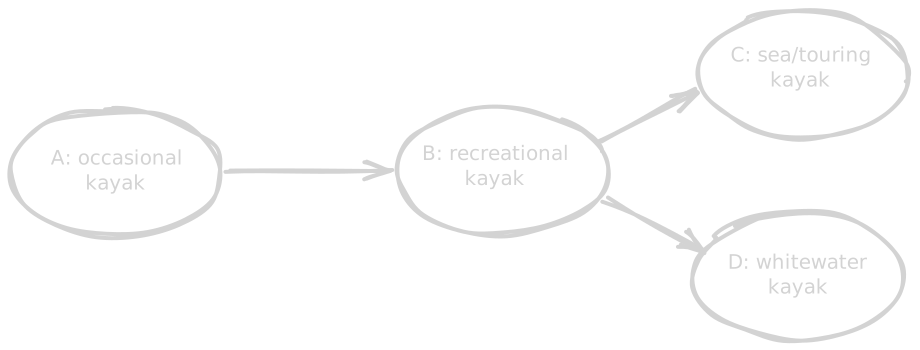
- A: Everyone starts here. Go out once in a while. Maybe in a rental, maybe in a friend’s boat. Maybe you buy your own and maybe it hangs in your garage untouched most of the year
- B: kayak becomes a regular part of what you do. Maybe you upgrade to a more permanent boat, maybe you keep the boat you always had. But now, you are more intentional about making time for being on the water.
- Many people are very happy staying at (B). You go out, you enjoy a nice, warm beautiful day on the water. It’s fun, it’s relaxing and you get some exercise.
- B ⇒ C/D: And a few people, start to push against boundaries…
- Maybe you want to go on longer trips, 15-20+ miles? multiple days with overnights?
- Maybe you want to paddle longer in the season (a.k.a in the “shoulder season”) or all-year around
- Maybe you want to try paddling in currents
- Maybe you want to paddle in open/coastal water or very large lakes
- Maybe you don’t want to skip a paddle just because it is windy/rainy/wavy
- And so, depending what edge you are pushing against, now you enter one of the next two phases of the hobby…
- C/D: Shared theme of going beyond recreational kayak…
- Becoming aware of safety and having the right gear for the conditions
- Taking formal instruction to gain basic skills, understanding and confidence
- Being intentional about building and practicing the skills
- Being especially intentional about practicing rescues (both self and assisted)
- Being intentional about finding a community because pushing your boundaries by yourself is a quick way to make some terrible mistakes
- And then most people come to a fork (a few go down both paths)…
- C: Sea/touring kayaking - building skills you need to be safe and effective in open water and in conditions (air/water temperatures, rain, wind, waves, currents, etc) and being prepared for anything that might happen when you are far away from shore
- Being ready and prepared for elements that will try to kill you (nature can be brutal)
- D: Whitewater kayak - becoming intentional about navigating rivers and then pushing the boundary about the level/class of that river
- I’m not a whitewater kayaker but from what little I know, the class of the river/current is measured by the type and amount of things which will try to kill you while you are in the river/rapids/current